
Why Most Solutions Fail Before Code Is Written
Most solutions do not fail because the code is bad. They fail because the thinking that led to the code was incomplete, rushed, or fundamentally flawed. By the time a team begins to build, many of the most important decisions have already been made, often without anyone realising it. The result is a product that functions exactly as designed, yet fails to deliver real value.
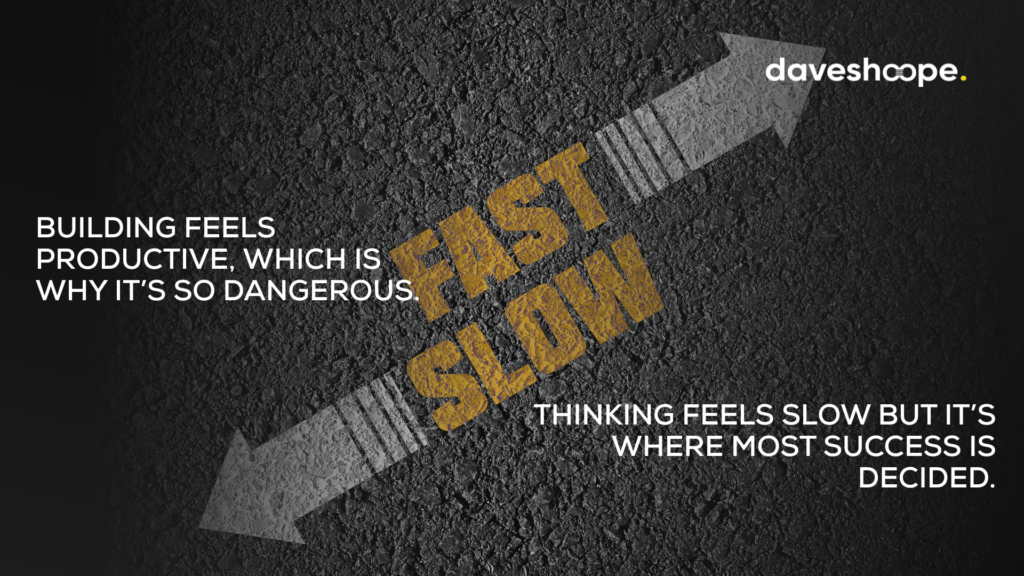
In modern technology culture, building is celebrated far more than thinking. Speed is praised. Shipping is rewarded. Tools are mistaken for progress. In this environment, pausing to deeply understand a problem can feel like hesitation, even incompetence. But in reality, that pause is where most success is decided.
The uncomfortable truth is that many projects are doomed long before a single line of code is written.
The Illusion of Progress
One of the reasons solutions fail early is because building creates the illusion of progress. Meetings feel productive when features are discussed. Roadmaps feel reassuring when timelines are defined. Prototypes give the impression that clarity has been achieved. Yet none of these guarantee that the right problem is being solved.
Teams often mistake activity for alignment. They assume that because everyone is busy, everyone understands the same thing. But shared momentum is not the same as shared understanding. When assumptions differ beneath the surface, execution only amplifies the confusion.
By the time these differences emerge, the solution is already expensive, politically defended, and emotionally protected. At that stage, it becomes far harder to ask fundamental questions without appearing disruptive.
Treating Symptoms as the Problem
A common failure point is the tendency to respond to symptoms instead of root causes. A drop in revenue, a rise in support tickets, or a decline in engagement creates pressure to act quickly. Leadership wants answers. Teams want direction. Something must be built.
What often follows is a solution designed to address what is visible, not what is true. A new feature is added to improve engagement. Automation is introduced to reduce workload. A dashboard is built to increase visibility. These actions may temporarily relieve pressure, but they rarely resolve the underlying issue.
Symptoms are outcomes of deeper system behaviour. When those systems are not understood, solutions simply shift the problem elsewhere. Over time, complexity increases, workarounds multiply, and teams begin managing the product instead of improving it.
The Cost of Skipping Problem Definition
Defining a problem well is difficult work. It requires slowing down when everyone wants speed. It requires asking uncomfortable questions. It often reveals that the real issue is not technical at all, but organizational, behavioral, or strategic.
Because this work is hard to measure and difficult to showcase, it is frequently skipped. Teams move directly from a vague sense of pain to a concrete solution. The assumption is that clarity will emerge during execution. It rarely does.
When a problem is poorly defined, every subsequent decision becomes harder. Scope expands without direction. Features are debated without criteria. Success metrics are unclear or constantly changing. Engineers build exactly what is requested, only to discover that what was requested does not solve the real issue. At that point, the problem is reframed as an execution failure, even though execution was never the issue.
Tools Are Not Strategy
Another reason solutions fail early is the overreliance on tools. New technologies, frameworks, and platforms are often introduced with the promise of transformation. Teams believe that adopting the right tool will automatically produce better outcomes.
Tools only amplify intent. If the intent is unclear, tools amplify confusion.
This is especially visible with AI adoption. Many organizations rush to integrate AI into their workflows without first understanding what decisions should improve, what processes are broken, or what outcomes truly matter. The result is sophisticated systems solving poorly defined problems at scale.
Technology does not compensate for unclear thinking. It exposes it.
Building Before Alignment
Many teams assume alignment exists because no one is objecting. In reality, silence often masks disagreement, uncertainty, or disengagement. Different stakeholders hold different mental models of the problem, but those differences remain unspoken because momentum has already taken over.
When alignment is missing at the thinking stage, it resurfaces during delivery. Requirements change. Priorities shift. Deadlines slip. Friction increases between teams. Each group believes the others are failing, when the real failure happened much earlier.
True alignment does not come from consensus around a solution. It comes from shared understanding of the problem.

What Successful Teams Do Differently
Teams that consistently build effective solutions spend more time thinking than building. Not because they are slower, but because they understand leverage. A well-defined problem reduces complexity, speeds execution, and improves decision-making at every stage.
They ask simple but difficult questions early. What exactly is broken? For whom? Why does it matter now? What would success look like if no software were involved? What would change if this problem were truly solved?
These teams are willing to delay building in order to reduce waste. They see clarity as an accelerant, not a blocker. As a result, when they do write code, it has purpose, direction, and durability.
The Real Reason Solutions Fail Early
Most solutions fail before code is written because thinking is treated as optional. In a culture that rewards visible output, invisible work is undervalued. Yet invisible work is what determines whether anything built will matter. Code can be rewritten, architecture can be refactored, features can be redesigned but unclear thinking, once embedded into a solution, is expensive to undo.
In the end, successful solutions are not the result of better tools or faster execution, they are the result of better thinking and done early when it matters most.
Seven Things to Do Before You Build Any Solution
1. Clearly Define the Problem in Plain Language
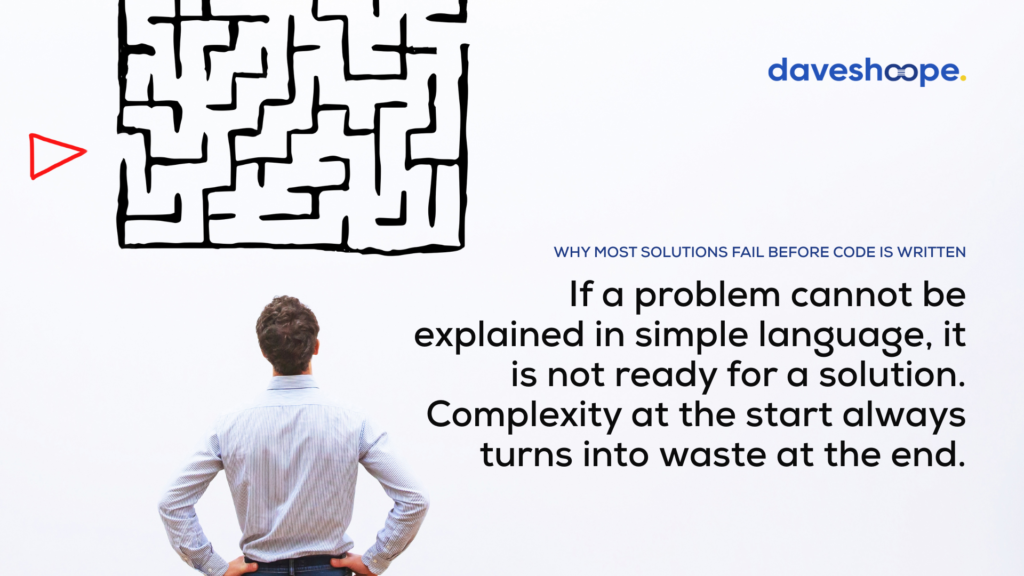
Before any solution is discussed, take the time to describe the problem in simple, non-technical terms. If the problem cannot be explained clearly to someone outside the team, it is not yet understood. Avoid framing the issue around tools, features, or systems. Focus instead on what is happening, who it affects, and why it matters now. This clarity prevents teams from building answers to questions that were never properly asked.
The most responsible builders understand this. They resist the urge to move fast without direction. They treat problem definition as a first-class discipline and they recognise that the hardest part of building is not writing code, but deciding what is worth building at all.
2. Separate Facts From Assumptions
Most early problem statements quietly mix observation with belief. Teams often assume they know why something is happening when they have only observed that it is happening. Take deliberate steps to distinguish what is known from what is inferred. This discipline reduces the risk of designing solutions around explanations that feel reasonable but are ultimately wrong.
3. Understand the System Around the Problem
No problem exists in isolation. It lives within a network of processes, incentives, behaviours and constraints. Understanding this broader system often reveals that the visible issue is only a downstream effect of something deeper. Solutions built without system awareness tend to fix one area while damaging another, creating more complexity over time.
4. Define What “Success” Actually Means
Before deciding how to solve a problem, agree on what improvement looks like. Success should be expressed in terms of changed outcomes, not completed features or deployed tools. When success is clearly defined, teams make better trade-offs, avoid unnecessary work, and stay focused on impact rather than activity.
5. Explore Non-Technical Solutions First
Not every problem requires software. Many challenges can be reduced through better communication, clearer ownership, simpler processes, or policy changes. Exploring these options first does not weaken a technical solution; it strengthens it. Technology should reinforce good decisions, not compensate for missing ones.

6. Validate Shared Understanding Across Stakeholders
Before building anything, ensure that everyone involved describes the problem in the same way. Misalignment at the thinking stage almost always reappears during delivery, where it is far more expensive to correct. Shared understanding is not about agreement on a solution, but agreement on the problem itself.
7. Treat Building as a Long-Term Responsibility
Every solution adds weight to a system. It introduces maintenance, dependency, and long-term cost. Building should never be a reflexive response to pressure or urgency. The right question is not whether a solution can be built, but whether it deserves to exist and whether it genuinely improves the system it enters.
When these principles are followed, code becomes a clear and deliberate expression of well-formed thinking. That is when solutions stop merely functioning and begin delivering lasting value.